camSPECS

    An advanced device for more efficient spectral sensitivity measurements.

    camSPECS for spectral sensitivity measurements

    camSPECS for spectral sensitivity measurements

    Product Overview

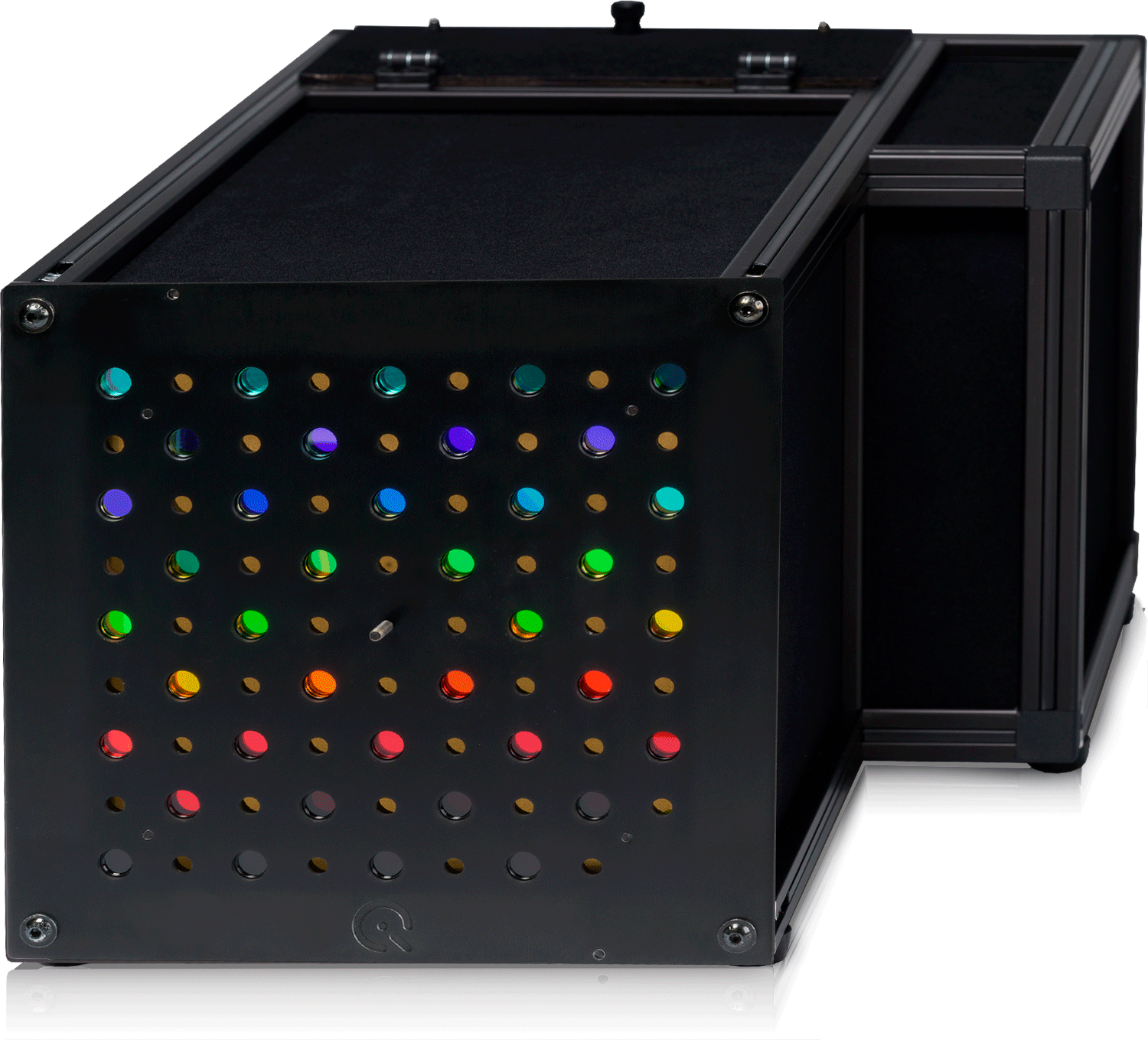
    camSPECS measures spectral sensitivity more effectively by mounting all interference filters on a single “test chart.” The newest version uses new high-quality interference filters.

    The light source is designed to ensure equal power output across the interference filters and not exceed the camera's dynamic range. Neutral-density filters on the front plate are used to compensate for potential illumination non-uniformities.

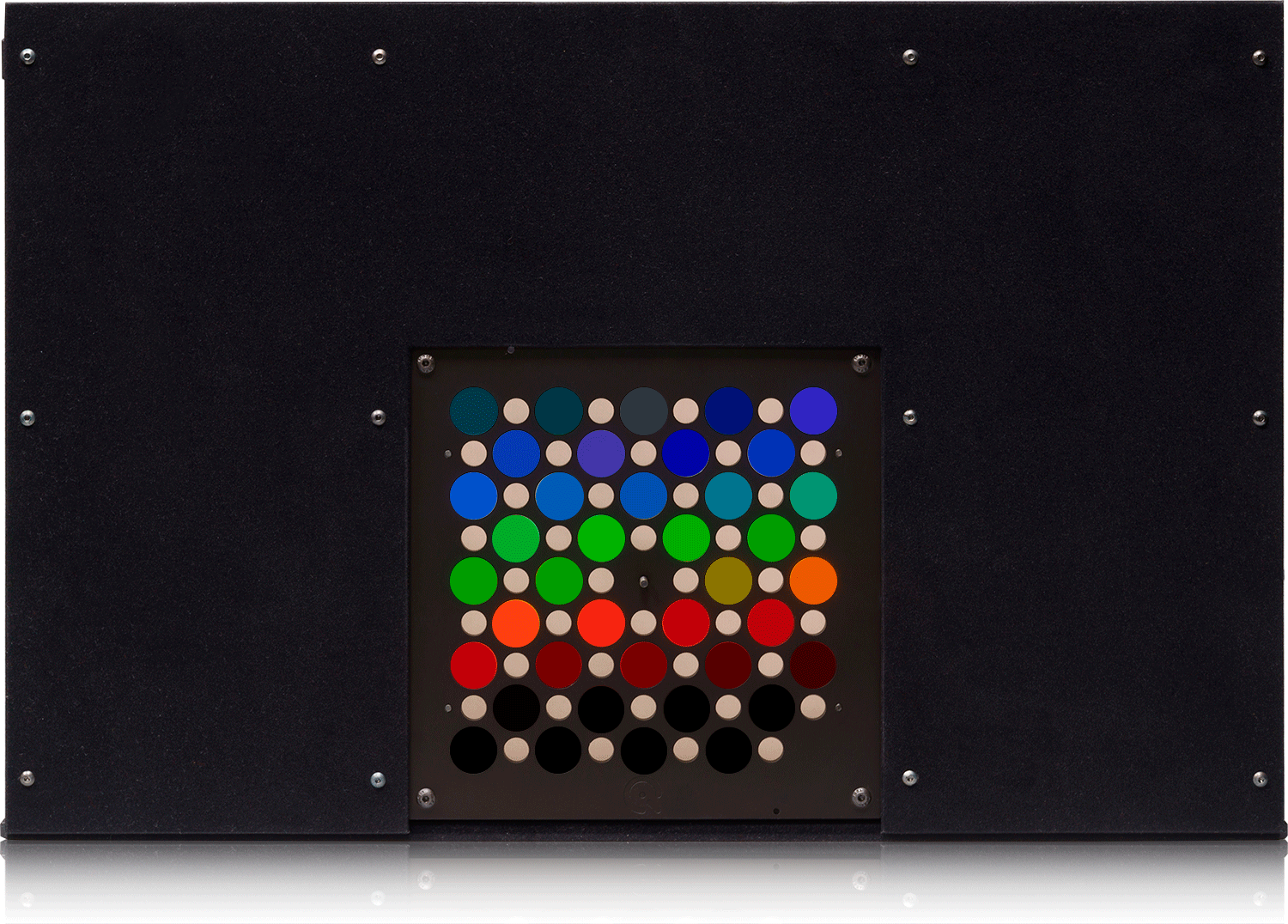
    The camSPECS hardware consists of a metal housing with a stabilized power supply for the halogen light source. The 39 interference filters, mounted on the front plate, provide monochromatic light from 380 nm to 760 nm.
    Key Benefits

    Measure spectral sensitivities

    camSPECS is designed to enable more efficient spectral-sensitivity measurements for a camera system.

    39 Interference filters

    camSPECS combines all 39 high-quality interference filters onto one "test chart."

    Determining CCMs

    The camSPECS software has a module for calculating color correction matrices (CCMs).

    Color transform generation

    Use camSPECS to build optimal color transforms that convert camera values to colorimetric values.

    Combine with in-situ database

    Use our in-situ database to visually evaluate ICC profiles using real images.

    Evaluation Software

    Calculate the spectral sensitivity from the images and the filter calibration data as a direct measurement.

    Product Options and Software

    We offer multiple setup options and control software
    camSPECs-XL full test setup

    camSPECS XL & camSPECS Plate (iQ-LED)

    The XL version uses the same new high-quality interference filters introduced in V2, but the filters now have twice the diameter. This larger version is better suited for measuring cameras with wide-angle lenses, such as those used in automotive camera systems.

    camSPECS Plate (TE292)

    The plate is designed based on the front plate of the camSPECS device, with all interference filters mounted on a single “test chart” to quickly measure spectral sensitivities from a single image. Unlike the full camSPECS device, the camSPECS plate is a standalone product designed primarily for use with the LE7, a uniform iQ-LED illumination device.*

    There are two versions of TE292: the standard version and the XL variant, known as TE292A and TE292 B, respectively. Both are designed to match the front plates of their respective camSPECS devices and include the camSPECS software. An external calibration device is available upon request if no LE7 is ordered simultaneously.

    TE292B VIS-IR

    This version of the camSPECS plate covers an extended wavelength range from 380 nm to 1050 nm in 10 nm steps and includes 68 filters.

    camSPECS evaluation software

    camSPECS Software

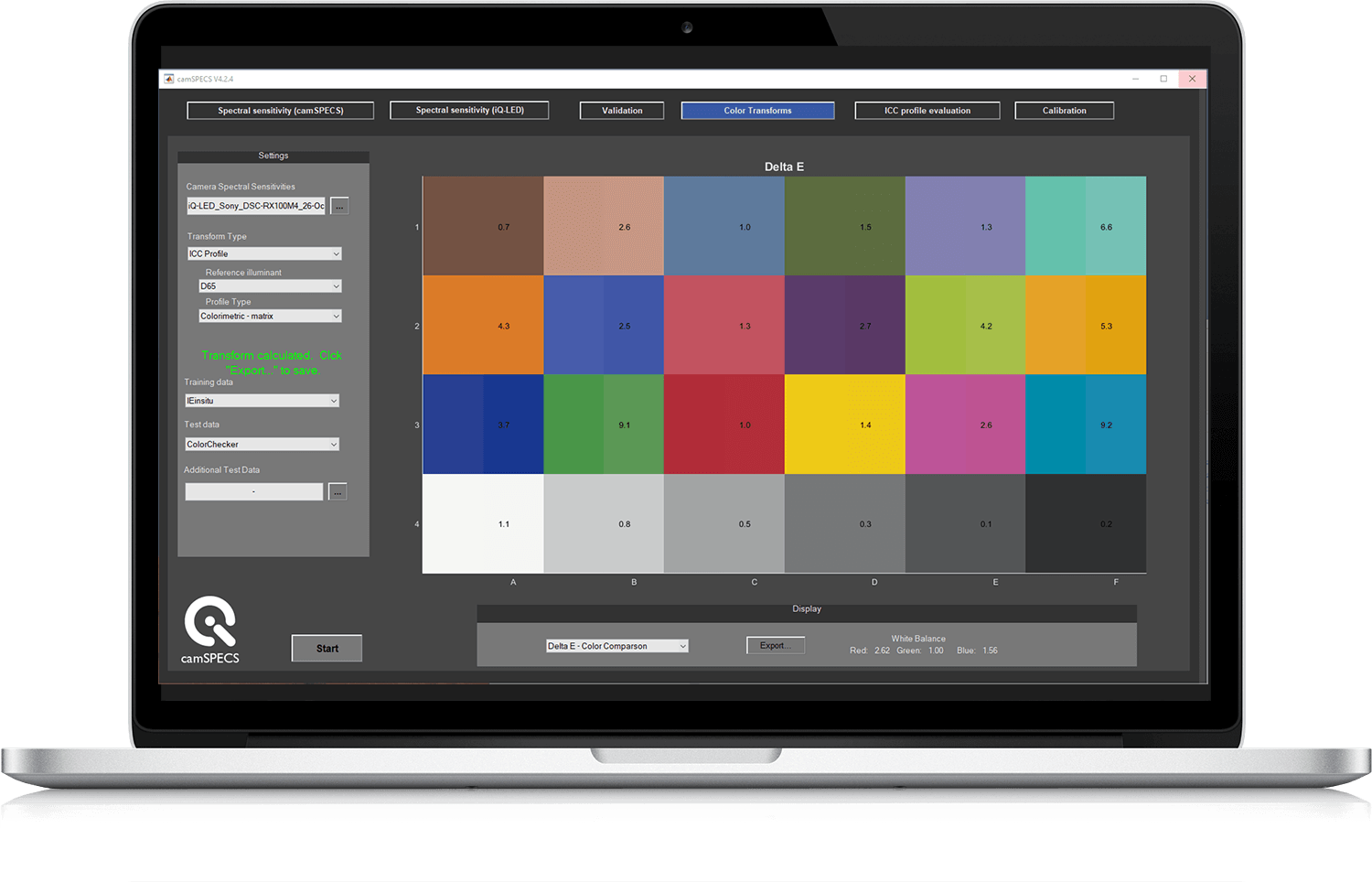
    The evaluation software makes measuring fast and convenient. It calculates spectral sensitivity from images and filter calibration data, providing a direct measurement (similar to a monochromator). The software reads image files such as TIFF or common raw files* and can perform a dark frame subtraction if needed. Non-Bayer pattern sensors (e.g., RGB-IR or RGBC) can also be evaluated. In this case, all four channels are measured independently.

    The primary application of spectral sensitivities is to calculate color correction matrices (CCMs) using the CIECAM16 model and to export ICC and Adobe ACR profiles with 2D- and 3D-MLUT rendering. An additional feature assesses the measurement setup by comparing real camera data with predicted RGB values.

    For calculating individual CCMs, the spectral radiance of natural objects from the in situ database may be used.

    Software Features:

    • Spectral sensitivity measurement

    • Generation of color transforms, including 3x3 matrices and others (RGB to XYZ), with different algorithms supporting popular profile types

    • Creation of ICC profiles

    • Support for 2D- and 3D-MLUT color transforms

    • CIECAM16 implementation for building color transforms

    • A test procedure for evaluating color transforms with different training data

    • RAW file* processing / dark frame subtraction

    • Validation by comparing the camera and predicted RGB values

    • Visual evaluation of ICC profiles with real images

    • Calibration with an included calibration device

    • Export of all results to XML or plain text files

    Use Cases

    Typical application areas

    Determination of CCMs (color correction matrices)

    The spectral sensitivity of a camera is interesting to examine, but the real benefit is using it to calculate the optimal color correction matrix for the camera. The camSPECS software includes a module for calculating such matrices. Three algorithms are implemented: a least-squares linear regression, a white-point-preserving least-squares regression, and the CIECAM16 model. The required input data are the camera spectral response, the illumination spectral distribution, and the spectral training data.

    The required training data can be either the provided ColorChecker spectra or measured spectra of natural objects. Image Engineering provides access to a large database of in situ spectral radiance data. White balancing can be incorporated into the matrix calculation as a separate option.

    Color Transform Generation

    Once the camera spectral sensitivities are determined, it is possible to build optimal color transforms to convert camera values to colorimetric values. By including reference illumination and standard chart data (or newly available, specially measured in situ training data representative of real scenes), color transforms are built that optimize color appearance differences using CIECAM16. Various methods and transform types are supported, including colorimetric matrices, white-point-preserving transforms, and ICC profiles, with more being added continuously.

    Technical Specifications

    Detailed technical specifications and performance data

    camSPECS
    camSPECS XL
    Light source
    Halogen (24V / 250 W) Osram 64657 HLX
    Halogen (24V / 250 W) Osram 64657 HLX
    Color temperature
    3550 K
    3550 K
    Wavelength range
    380 - 760 nm (10 nm steps)
    380 - 760 nm (10 nm steps)
    Bandwidth
    10 nm
    10 nm
    Diameter interference filters
    10 mm
    22 mm
    Diameter ND filters
    6 mm
    10 mm
    Dimensions [W x H x D]
    295 x 255 x 520 mm
    295 x 255 x 520 mm
    Weight
    7 kg
    7 kg

    Software Downloads

    Download the latest software package for camSPECS.

    camSPECS Software

    camSPECS software (Windows 64bit installer)

    camSPECS Software changelog

    camSPECS Software changelog (txt)

    Matlab Compiler Runtime R2016b (required)

    Matlab MCR (Windows 64bit executable)

    Documentation

    camSPECS Datasheet

    Technical specifications and product details

    camSPECS XL Datasheet

    Technical specifications and product details

    camSPECS User Manual

    Complete operating instructions

    camSPECS Product Flyer

    A basic product overview

    Quickstart Guide

    camSPECS quickstart guide

    Terms & Conditions

    camSPECS Terms & Conditions

    Sample Data

    camSPECS sample data (zip)